Guide

What does a credentialing specialist do?

A credentialing specialist (or credentialing coordinator) makes sure every clinician's documents are complete, verified and current. At a staffing agency, they're the reason placements start on time.

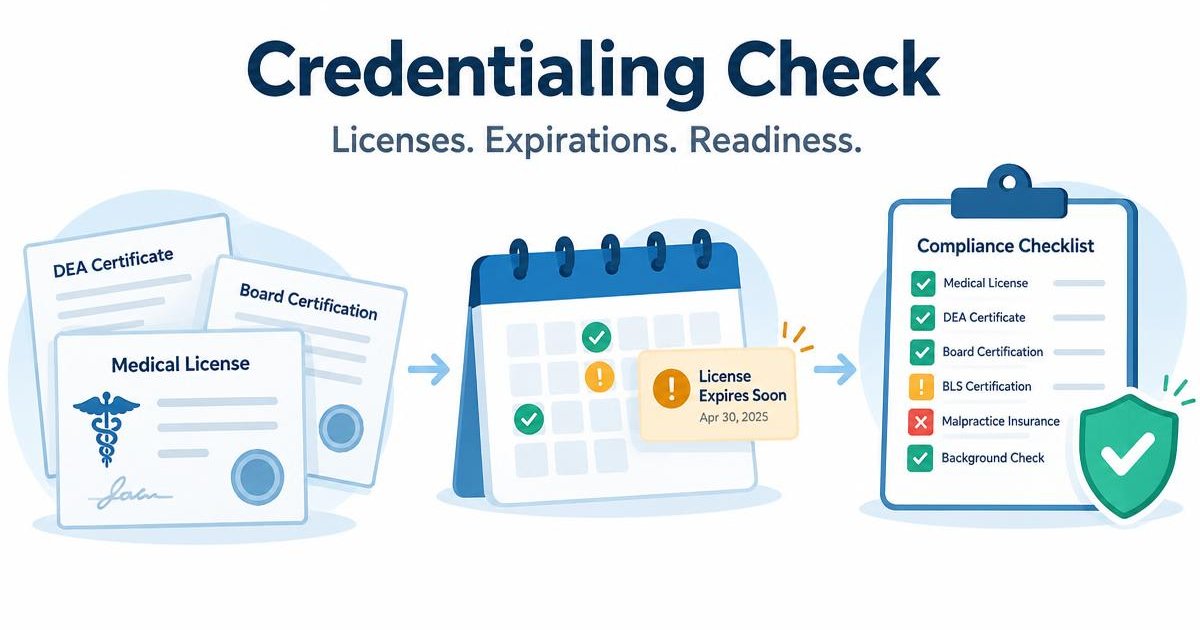
Credentialing Check: licenses, expiration calendar and compliance checklist

Free interactive credentialing checklist

Pick RN, LPN, CNA, allied or locums and tick off every document a clinician file needs. Print it or save it as a PDF.

Typical daily tasks

  • Collecting licenses, certifications and health records from clinicians
  • Verifying credentials with primary sources
  • Building submission files that match each facility's requirements
  • Chasing renewals before documents expire
  • Answering audits and facility compliance requests

Key skills

  • Attention to detail
  • Organization across many files and deadlines
  • Clear, persistent communication with clinicians
  • Knowledge of state and facility requirements

Tools that save hours every week

The biggest time sink is tracking dates and chasing people. Credentialing Check automates both: an expiration calendar, daily reminder emails sent to clinicians directly, AI that reads credential text and fills in dates, and a ready/not-ready view per facility.

Frequently asked questions

Is a certification required to be a credentialing specialist?

Not always, but many specialists earn the CPCS (Certified Provider Credentialing Specialist) credential from NAMSS to advance.

What's the difference between a credentialing specialist and a recruiter?

Recruiters find and place clinicians; credentialing specialists make sure those clinicians are cleared to work.

Keep reading

Try Credentialing Check free

Free for up to 5 clinicians. No credit card required.

Request a demo

Tell us about your agency and we'll show you how Credentialing Check fits your workflow.